
Dentist in Bodrum
Dentist in Bodrum services provide professional dental assessment for toothache, broken or cracked teeth, lost fillings and crowns, gum problems, suspected dental infections and other oral health concerns.
Whether you live in Bodrum or are visiting the region for a holiday, an unexpected dental problem can quickly become uncomfortable. Persistent toothache, gum or facial swelling, a broken tooth or a lost filling should be assessed to identify the underlying cause and determine the appropriate treatment.
When May You Need a Dentist in Bodrum?
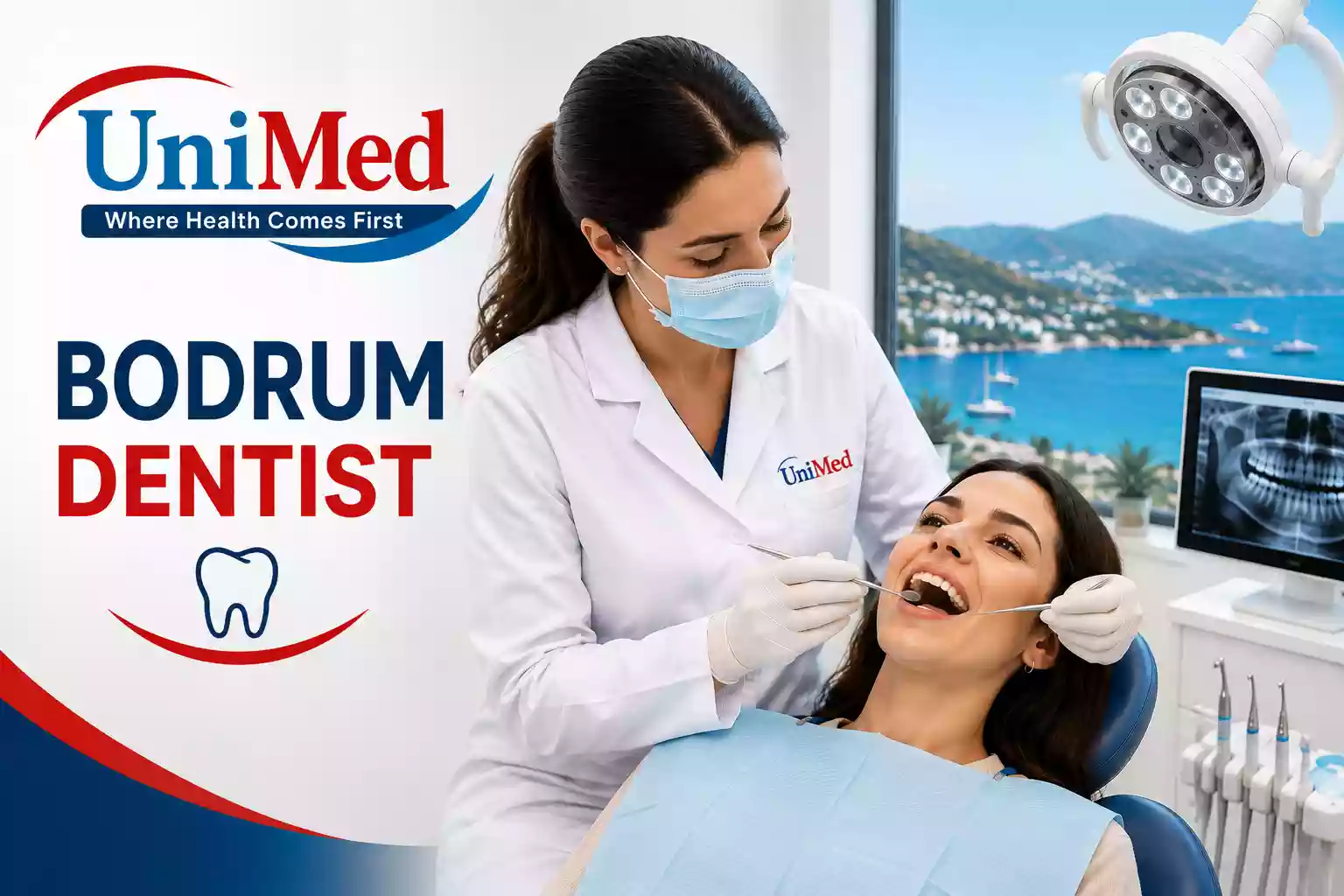
A Dentist in Bodrum may be needed for much more than a routine dental check-up. Sudden pain, dental trauma, damaged restorations or signs of infection can require professional assessment during your stay in Bodrum.
- Sudden or persistent toothache,
- Broken or cracked teeth,
- Lost or damaged fillings,
- Loose or detached crowns,
- Swollen or bleeding gums,
- Suspected dental abscess or infection,
- Hot and cold sensitivity,
- Pain while biting or chewing,
- Dental trauma or tooth injuries,
- Root canal treatment assessment,
- Tooth extraction assessment,
- Routine oral and dental health examinations.
The appropriate dental treatment depends on the cause of the problem, examination findings, the condition of the affected tooth and, when required, dental imaging.
Dentist in Bodrum for Toothache
Toothache can have several causes. Tooth decay, a cracked tooth, inflammation of the dental pulp, gum disease and dental infection can all produce pain, but they may require very different treatments.
A Dentist in Bodrum assessment is particularly important when pain becomes worse at night, is triggered by hot or cold food and drinks, continues for several days or becomes more noticeable while chewing.
Dental Abscess, Infection and Swelling
An infection around a tooth root or the surrounding tissues may cause pain, tenderness, an unpleasant taste, discharge and swelling. In some cases swelling remains localised around the gum, while in others it may extend into the face.
Pain relief may temporarily reduce symptoms, but it does not remove the underlying cause of a dental infection. Increasing swelling, fever, discharge or worsening pain should not be ignored.
Broken Teeth and Dental Trauma
A tooth may crack or break following a fall, impact, sporting accident, biting hard food or another type of trauma. Depending on the severity of the injury, the damage may involve only the outer part of the tooth or extend into deeper dental structures.
A broken, cracked, loose or displaced tooth should be professionally assessed even when there is little immediate pain. Early evaluation can help determine whether the tooth can be preserved and which treatment is appropriate.
Lost Fillings and Crown Problems
A filling or crown can occasionally loosen, break or fall out while you are travelling. The exposed tooth may become sensitive to hot, cold or sweet foods and may cause discomfort when biting or chewing.
During a Dentist in Bodrum examination, the remaining tooth structure, existing restoration and surrounding tissues can be evaluated before an appropriate temporary or definitive treatment is planned.
When Is Root Canal Treatment Considered?
The pulp tissue inside a tooth may become affected by deep decay, trauma or infection. Persistent pain, significant sensitivity to hot or cold temperatures or pain that becomes particularly severe at night may occur when the pulp is involved.
Not every toothache requires root canal treatment. The decision is made after a dental examination and, when appropriate, dental imaging.
When May Tooth Extraction Be Required?
Tooth extraction may be considered when a tooth is severely damaged, extensively fractured or cannot reasonably be preserved. The decision should not be based only on the intensity of the patient’s pain.
The condition of the tooth, surrounding tissues and available alternatives for preserving the tooth should be considered before extraction is recommended.
Bleeding Gums and Gum Problems
Bleeding, redness, tenderness or swelling of the gums may be associated with different periodontal conditions. Persistent or recurrent gum symptoms should be assessed rather than simply ignored.
Localised gum swelling can also be associated with a problem originating from a nearby tooth. Dental examination helps distinguish between possible causes.
Emergency Dentist in Bodrum
Severe toothache, sudden swelling, a broken tooth or a lost restoration can be particularly disruptive during a holiday. An urgent dental assessment focuses on identifying the source of the problem rather than simply masking the symptoms.
Once the cause has been assessed, the appropriate dental treatment or next step can be planned according to the individual situation.
Dentist in Bodrum for International Tourists
International visitors may need dental assistance while they are away from their regular dentist. Unexpected toothache, a broken tooth or a dental infection can be particularly stressful when it occurs during a short stay in Bodrum.
Patients should provide information about previous dental procedures, current medications, known allergies and relevant medical conditions. Previous dental X-rays or reports may also be useful when available.
Dental Care for Hotel and Villa Guests
Guests staying in Bodrum hotels, resorts and private villas may unexpectedly develop toothache, gum swelling, a broken tooth or a lost filling. When dental imaging or direct dental treatment is required, assessment in an appropriately equipped clinical environment is important.
Early assessment can help prevent a dental problem from interfering with the rest of your holiday and allows the necessary treatment to be planned in a more controlled way.
Dental Treatments in Bodrum
Dental treatment should be selected according to the individual diagnosis rather than the symptom alone. For information about fillings, root canal treatment, tooth extraction, gum care and other procedures, visit our Dental Treatments in Bodrum section.
What Should You Tell the Dentist Before Your Examination?
- When the toothache or dental problem started,
- Whether the pain is constant or intermittent,
- Whether hot or cold temperatures trigger the pain,
- Whether there is swelling, bleeding or discharge,
- Whether the affected tooth has previously been treated,
- Any medications you currently take,
- Known medication allergies,
- Relevant medical conditions,
- Previous dental X-rays or reports, if available.
Frequently Asked Questions About Dentists in Bodrum
Can I See a Dentist While on Holiday in Bodrum?
Yes. Local and international visitors can request dental assessment for toothache, broken teeth, lost fillings, gum problems and other dental concerns while staying in Bodrum.
Should I Wait If I Have Severe Toothache?
If pain persists, becomes increasingly severe or is accompanied by swelling, fever or increasing tenderness, dental assessment should not be unnecessarily delayed.
Should I See a Dentist for a Lost Filling?
Yes. The exposed tooth structure may become sensitive and could be vulnerable to further damage. A dental examination can determine the condition of the tooth and the appropriate restoration.
Will a Dental Abscess Go Away on Its Own?
A suspected dental abscess should be professionally assessed. Even if symptoms temporarily improve, the underlying source of infection may still require dental treatment.
Do I Need an X-Ray for Toothache?
Not every case of toothache requires an X-ray. The dentist decides whether dental imaging is appropriate after considering the symptoms and examination findings.
Can International Patients See a Dentist in Bodrum?
Yes. International visitors staying in Bodrum can request dental assessment and treatment planning according to their individual dental needs.
Do Not Let Toothache Take Over Your Bodrum Holiday
Dental problems rarely arrive at a convenient time. Mild sensitivity in the morning can develop into significant pain at night, while a lost filling or swollen gum can make eating, sleeping and enjoying your holiday difficult.
A Dentist in Bodrum assessment focuses on more than temporary pain relief. Identifying the cause of the problem helps determine the appropriate dental treatment and the safest next step.
