
Dental Implants in Bodrum
Dental Implants in Bodrum are a modern dental treatment option used to help restore function and appearance after the loss or extraction of one or more teeth. Dental implants are placed into the jawbone and can support crowns, bridges or other prosthetic restorations. Treatment planning should be personalised according to bone condition, gum health, the number of missing teeth, the patient’s general health and the type of final restoration planned.
People living in Bodrum as well as local and international visitors staying in the region may request a professional assessment for implant treatment. When planning Dental Implants in Bodrum, the goal is not only to replace a missing tooth. Chewing function, surrounding tissues, bone support, aesthetic expectations and long-term oral health should also be considered together.
What Are Dental Implants in Bodrum?
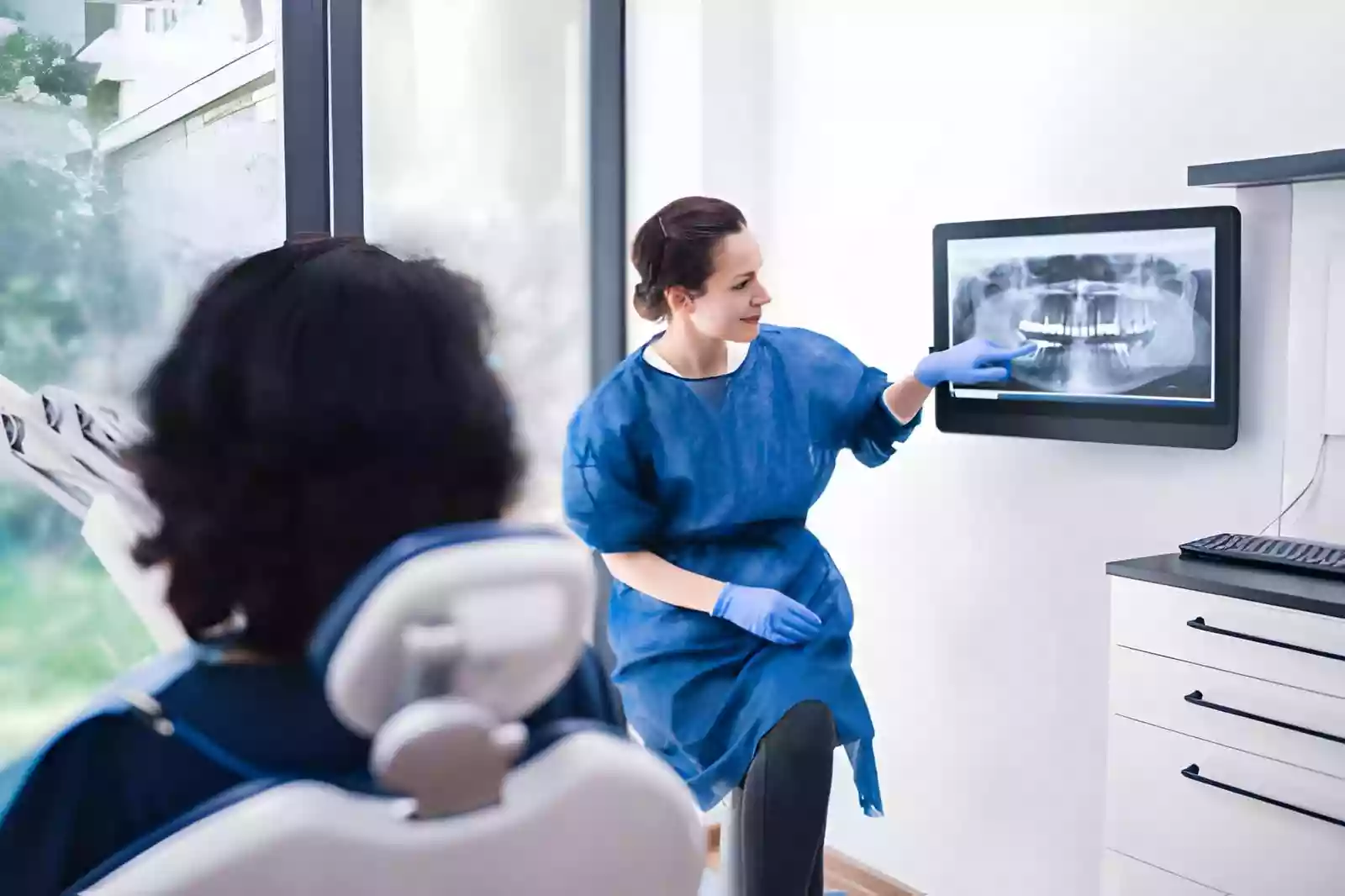
A dental implant is an artificial tooth root placed into the jawbone to replace the root portion of a missing natural tooth. Once appropriately integrated with the surrounding bone, it can support a crown, bridge or another prosthetic restoration. The final restoration depends on the number of missing teeth and the patient’s individual oral condition.
The purpose of Dental Implants in Bodrum is not simply to fill an empty space. When correctly planned, implant treatment can help support chewing function, reduce the need to prepare healthy neighbouring teeth and contribute to a more balanced dental structure.
Who May Be Suitable for Dental Implant Treatment?
Patients who have lost one or more teeth may be considered for dental implant treatment. However, having a missing tooth alone does not mean that an implant can automatically be placed. Sufficient bone support and healthy oral tissues are important for treatment planning.
- Patients with a single missing tooth,
- Patients with several missing teeth,
- People who experience difficulty using removable dentures,
- Patients with suitable jawbone support,
- People with stable gum health,
- Patients whose general health is appropriate for dental surgery,
- Suitable patients seeking fixed prosthetic solutions for missing teeth.
- Dental Implants in Bodrum
Suitability for dental implants can only be properly determined after clinical examination and, when required, dental imaging. The same number of implants or the same treatment method is not appropriate for every patient.
Dental Implant for a Single Missing Tooth
When only one tooth is missing, an implant-supported crown may be considered. One important advantage of this approach is that, in suitable cases, the missing tooth can be replaced without reducing or preparing the healthy neighbouring teeth.
The position, diameter and length of the implant are planned according to the available bone. In the front region of the mouth, gum levels and aesthetic appearance can be just as important as function.
Dental Implants for Multiple Missing Teeth
When several neighbouring teeth are missing, it may not always be necessary to place one implant for every missing tooth. In selected cases, an implant-supported bridge may be used as part of a broader prosthetic treatment plan.
The number of implants required depends on the number of missing teeth, jawbone structure, chewing forces and the design of the planned restoration. For this reason, implant numbers should not be determined only by counting the missing teeth.
Dental Implants for Complete Tooth Loss
Implant-supported treatment options may also be considered when all teeth are missing from the upper or lower jaw. The number and positioning of implants may vary depending on whether a fixed or removable prosthetic restoration is planned.
In patients with complete tooth loss, bone volume, jaw relationship, facial structure and individual expectations should all be considered. It is not appropriate to use exactly the same implant number or prosthetic system for every patient.
Can an Implant Be Placed Immediately After Tooth Extraction?
In selected suitable cases, a dental implant may be placed during the same appointment as tooth extraction. This may be referred to as immediate implant placement. However, this approach is not appropriate after every extraction.
Factors such as active infection, bone loss, the condition of the extraction socket or inability to achieve sufficient initial implant stability may require a different treatment plan. In some patients, allowing the extraction site to heal before placing the implant may be more appropriate.
Are X-Rays or CT Scans Needed Before Dental Implants?
Before implant treatment, it is important to assess the height and width of the jawbone and the relationship of the planned implant site to nearby anatomical structures. Dental X-rays or, when required, three-dimensional imaging may therefore be used.
Detailed imaging may be particularly useful in areas close to nerve canals, sinus cavities or where the available bone is limited. It can help the dentist plan the implant position more accurately.
Can Dental Implants Be Placed If There Is Not Enough Bone?
After tooth loss, the jawbone may gradually lose volume over time. In some patients, the existing bone may not be sufficient for straightforward implant placement.
In these situations, bone grafting, bone augmentation or additional surgical procedures involving the sinus floor in the posterior upper jaw may be considered. Whether any additional procedure is necessary should be determined after clinical examination and appropriate imaging.Dental Implants in Bodrum
How Is Dental Implant Treatment Performed in Bodrum?
The first stage usually involves an oral examination and assessment of the area where the implant will be placed. Once the necessary imaging has been completed, the implant position, size and surgical approach can be planned.
After appropriate local anaesthesia, the implant is placed into the jawbone. A healing period may then be required to allow biological integration between the implant and the surrounding bone. Once sufficient healing and stability have been achieved, the prosthetic stage can begin.
Is Dental Implant Surgery Painful?
Dental implant surgery is generally performed under local anaesthesia, with the aim of controlling pain in the treatment area during the procedure. Patients may still feel pressure or movement.
After the anaesthetic wears off, a certain degree of tenderness, swelling or discomfort may occur. The severity of these symptoms can vary depending on the extent of the procedure, the number of implants placed and the individual’s healing response.
How Long Does It Take for a Dental Implant to Integrate with the Bone?
The biological connection that develops between a dental implant and the surrounding bone is known as osseointegration. Healing time can vary depending on the implant site, bone quality, surgical technique and individual patient factors.
For this reason, it is not appropriate to give exactly the same healing period for every patient. Temporary tooth options may be possible in selected situations, while the permanent restoration may require waiting until the implant has reached adequate stability.
What Should You Do After Dental Implant Surgery?
After implant surgery, protecting the surgical site and maintaining appropriate oral hygiene are important. Individual aftercare instructions may vary depending on the extent of the procedure.
- Follow the dentist’s post-operative care instructions,
- Avoid irritating the surgical area during the early healing period,
- Maintain oral hygiene as recommended,
- Be careful with very hot or hard foods,
- Avoid smoking and tobacco products,
- Use prescribed medication as instructed,
- Attend planned follow-up appointments.
- Dental Implants in Bodrum
Does Smoking Affect Dental Implants?
Smoking may negatively affect healing in oral tissues and can be one of the factors influencing the long-term health of tissues surrounding a dental implant.
Patients considering implant treatment should inform their dentist about smoking habits. Avoiding tobacco products may be recommended, particularly during the healing period after implant surgery.
How Long Do Dental Implants Last?
The lifespan of dental implants varies from one patient to another. Long-term implant success depends not only on the surgical procedure itself but also on oral hygiene, gum health, regular dental reviews, smoking habits and the chewing forces placed on the implant.
Although a dental implant is not a natural tooth, the surrounding gum and bone still require long-term care. Inflammatory conditions can also develop around implants, making professional maintenance and routine follow-up important.
Oral Care After Dental Implant Treatment
Daily oral care should continue after implant treatment has been completed. Controlling plaque accumulation around the implant and maintaining healthy gums are important parts of long-term implant care.
Regular tooth brushing, cleaning between the teeth and, where appropriate, additional cleaning aids may be recommended. The ideal cleaning method can vary depending on the type of implant-supported restoration. Dental Implants in Bodrum
When Is Swelling or Pain After an Implant Important?
A certain amount of tenderness and swelling may occur after implant surgery. However, if symptoms become significantly worse instead of gradually improving, or if fever, discharge, an unpleasant taste, uncontrolled bleeding or deterioration in general condition develops, further assessment may be necessary.
More serious symptoms such as rapidly increasing swelling of the face or neck or difficulty breathing or swallowing require urgent medical assessment. For information about dental services available in Bodrum, visit our Dental Treatments in Bodrum section. Dental Implants in Bodrum
Dental Implants in Bodrum for International Patients
International patients visiting Bodrum for a holiday, business trip or longer stay may also request a dental implant assessment. Because implant treatment can involve more than one stage, the patient’s travel schedule should be considered as part of treatment planning.
During the initial assessment, missing teeth, previous dental treatment, regular medications, known medical conditions and the amount of time the patient expects to stay in Bodrum can all be considered. The timing of the surgical and prosthetic stages may then be planned accordingly.
Why Are Follow-Up Appointments Important After Dental Implants?
Dental implant treatment does not end when the implant is placed into the jawbone. Healing of the surgical area, implant stability, gum health and the function of the final prosthetic restoration should all be monitored. Dental Implants in Bodrum
Regular follow-up appointments may help identify potential problems around the implant at an early stage and determine whether additional cleaning or maintenance is required.
Frequently Asked Questions About Dental Implants in Bodrum
Can everyone have dental implants?
No. Suitability for implant treatment depends on factors such as available bone, gum health, general medical condition, regular medications and other individual considerations.
How many implants are needed for one missing tooth?
A single missing tooth can often be treated with one implant, depending on the individual case. When several teeth are missing, however, the number of implants is not determined solely by the number of missing teeth. Bone structure and the planned prosthetic design are also important. Dental Implants in Bodrum
Can dental implant treatment be completed in one day?
The surgical placement of an implant may be completed in a single appointment in suitable cases, but this does not necessarily mean that the entire treatment can be completed on the same day. A healing period may be required before the permanent restoration is fitted.
Can an implant be placed immediately after a tooth is extracted?
Immediate implant placement may be possible in selected suitable cases. However, infection, bone condition or the characteristics of the extraction site may mean that implant placement should be performed at a later stage.
Can an implant-supported tooth look natural?
When the colour, shape and relationship of the implant-supported crown or prosthesis with the gum are carefully planned, a result that harmonises with the natural teeth can be targeted. Detailed prosthetic planning is especially important in the front region of the mouth.
Professional Planning for Dental Implants in Bodrum
A successful Dental Implants in Bodrum treatment plan depends on much more than simply placing an implant. Appropriate patient selection, detailed imaging, careful surgical planning, healthy gum tissues, appropriate prosthetic design and long-term oral maintenance all play an important role.
If you have one or more missing teeth, the first step is to assess your existing bone and oral condition. Your individual treatment plan should consider the number of implants required, implant position, any additional surgical procedures that may be necessary and the type of final restoration to be placed on the implants. Dental Implants in Bodrum
