
Foreign Body Removal in Bodrum
Foreign Body Removal in Bodrum covers the medical assessment and, where appropriate, removal of foreign objects from the skin, superficial tissues, ear or nose by a healthcare professional. Glass fragments, splinters, thorns, small metal pieces and similar objects may become embedded in tissue after minor accidents during daily life, holidays, outdoor activities or time spent at the beach.
The correct approach depends on where the foreign object is located, how deeply it is embedded, its size and material, and whether surrounding tissues have been affected. Deep, broken, painful or bleeding foreign bodies should not be removed using uncontrolled methods.
When May Foreign Body Removal in Bodrum Be Needed?
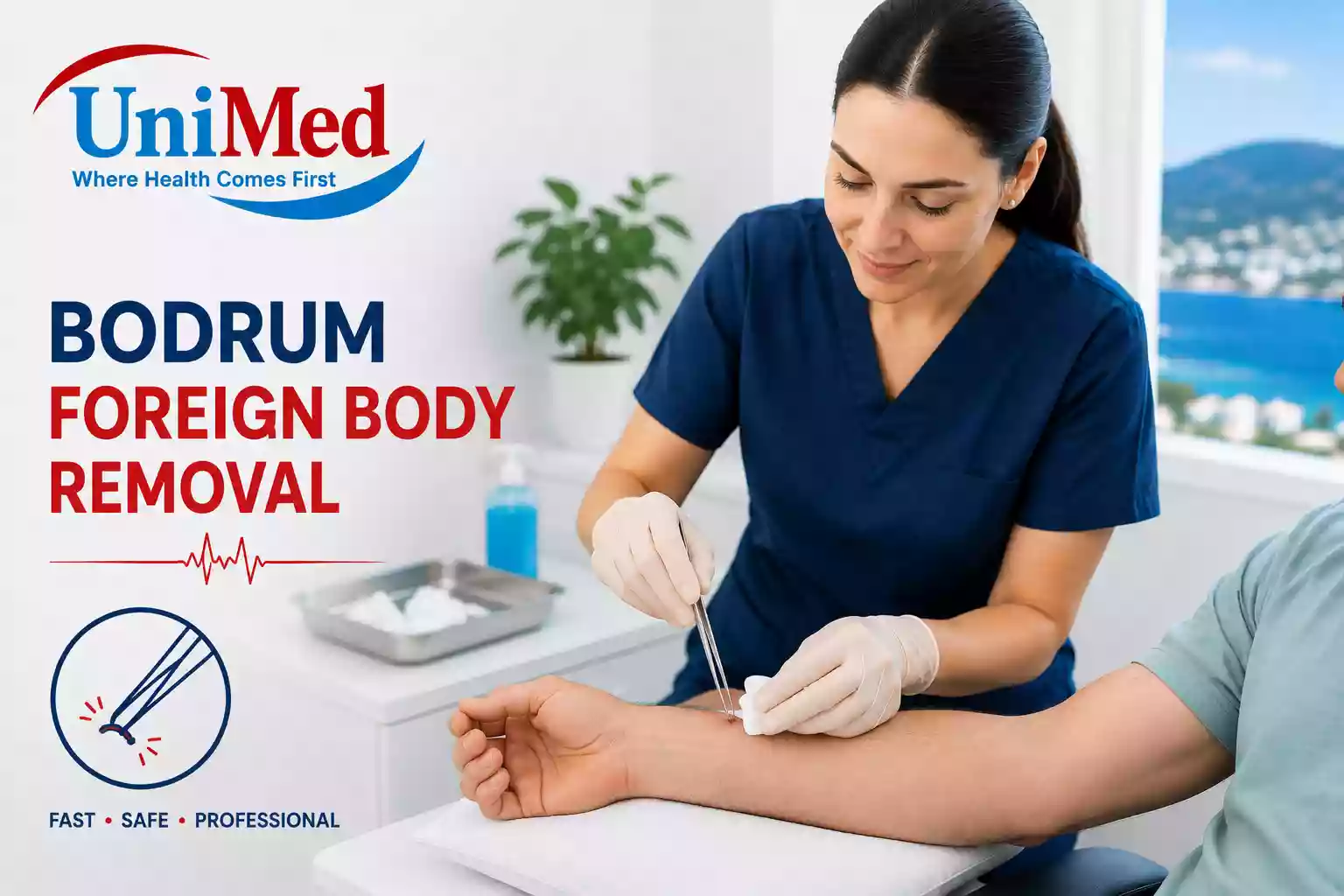
Foreign body injuries can occur in many different situations. A sharp object may enter the foot while walking barefoot on the beach, a wooden splinter may become embedded in a finger, broken glass may remain under the skin, or a small metal fragment may become trapped in superficial tissue.
- Splinters or thorns embedded in the skin,
- Suspected glass fragments beneath the skin,
- Small metal fragments entering tissue,
- Foreign objects related to beach or sea activities,
- Suspected foreign objects in the ear or nose,
- Pain or tenderness caused by an embedded object,
- Suspicion that part of an object remains inside a wound,
- Redness or swelling developing after a foreign body injury.
These situations may require professional medical assessment. The fact that an object is visible does not necessarily mean that it can be removed easily or safely.
Foreign Objects Embedded in the Skin
Splinters, thorns, glass and metal fragments may remain close to the skin surface or penetrate more deeply into the tissue. Even a small object that appears superficial can cause pain, tenderness or irritation when the affected area moves or bears weight.
Complete removal of the foreign material is important. If the object breaks during removal or a fragment remains inside the tissue, discomfort, inflammation or infection may continue.
Glass Fragment Removal in Bodrum
Small pieces of glass may remain beneath the skin following an injury involving broken glass. Depending on the location and depth of the fragment, visual examination alone may not always be sufficient.
Trying to locate or remove embedded glass at home using needles, knives or other sharp instruments can enlarge the wound, increase bleeding or push the fragment deeper into the tissue.
Splinter and Thorn Removal
Wooden splinters and plant thorns are commonly found in the hands and feet. Very small superficial objects may sometimes be straightforward to remove, while deeply embedded or broken fragments may require professional assessment.
Increasing redness, swelling, warmth, tenderness or discharge around the affected area should be assessed for possible infection.
Foreign Body in the Foot
In Bodrum, foreign body injuries to the foot may occur while walking barefoot around beaches, pools, gardens and outdoor areas. Glass, thorns or other sharp objects entering the sole of the foot may cause pain and tenderness when walking.
Because body weight repeatedly places pressure on the sole, an embedded object may become increasingly uncomfortable. Proper assessment is particularly important when the object is suspected to be deeply embedded.
Foreign Object in the Ear
Foreign objects in the ear canal are particularly common in children. In adults, small pieces of materials used during ear cleaning or other objects may occasionally remain inside the ear canal.
Trying to remove an object from the ear without proper visibility or equipment may push it further into the canal or injure surrounding structures.
Foreign Object in the Nose
Foreign objects in the nose are most frequently seen in young children. One-sided nasal blockage, discomfort or foul-smelling discharge may sometimes be associated with a retained foreign body.
Inappropriate removal attempts should be avoided because the object may be pushed further inside. Certain foreign objects, particularly button batteries, can cause rapid tissue damage and require urgent medical attention.
Wound Care After Foreign Body Removal
Removing the foreign object is only one part of the treatment process. The affected area may also need to be assessed for contamination, tissue damage and signs of infection.
Depending on the injury, wound cleaning, dressing or additional care may be recommended. Tetanus immunisation status may also need to be reviewed according to the wound and the patient’s vaccination history.
Can a Foreign Body Cause Infection?
Yes. Foreign objects contaminated by soil, dirty surfaces or organic material may increase the risk of infection. A fragment remaining inside the tissue may also contribute to persistent local inflammation.
Increasing redness, swelling, warmth, pain, discharge or fever after the injury may require further medical assessment.
Should You Remove a Foreign Object Yourself?
Some very small and superficial splinters may be straightforward to remove. However, uncontrolled attempts should be avoided when the object is deep, difficult to see, broken or located close to important anatomical structures.
Trying to search for glass or metal fragments using needles, blades or other sharp instruments may enlarge the injury and damage surrounding tissue. Professional assessment is the safer option when there is uncertainty.
Foreign Body Assessment at Hotels and Villas
Minor foreign body injuries may occur while staying at a hotel, villa or private residence in Bodrum. In suitable cases, an initial assessment may be arranged at the patient’s location.
When requesting assistance, explain where the foreign object is located, how the injury occurred and whether there is active bleeding. A clear photograph of the affected area may also help with initial planning.
Foreign Body Injuries on Yachts, Boats and at Marinas
Wooden splinters, small metal fragments, fishing equipment and minor injuries during sea activities may cause foreign objects to become embedded while travelling on a yacht or boat.
In suitable cases, an initial assessment may be organised at a marina, yacht or boat location. Providing the vessel name, marina or bay and live location helps with planning.
Bodrum Emergency Medical Services and Foreign Body Injuries
Foreign Body Removal in Bodrum may require different levels of medical care depending on the location of the object and the severity of the injury. Cases involving bleeding, deep wounds, suspected infection or additional trauma may require a more comprehensive assessment. For related healthcare support, visit Bodrum Emergency Medical Services.
Foreign Body Removal in Bodrum for International Tourists
International visitors may experience foreign body injuries during beach visits, swimming, boating, marina activities or other outdoor activities in Bodrum.
Knowing when and how the object entered the body, where the injury occurred and whether any previous removal attempt was made can assist medical assessment.
Unimed Clinic Bodrum Location
Patients who would like to visit the clinic for foreign body assessment can view Unimed Clinic Bodrum on the map. To get directions from your current location, use Unimed Clinic Bodrum on Google Maps.
Frequently Asked Questions About Foreign Body Removal in Bodrum
Can I Have a Foreign Object Removed in Bodrum?
Yes. The location, depth and type of foreign object are assessed first. Removal may then be planned when medically appropriate.
Can a Glass Fragment Under the Skin Be Removed?
Suitable cases can be assessed for removal. The depth and position of the glass fragment and its relationship with surrounding tissues help determine the appropriate approach.
Should I Try to Remove a Foreign Object Myself?
Deep, broken or difficult-to-reach objects should not be removed using uncontrolled methods. Incorrect attempts may push the object deeper, increase bleeding or damage surrounding tissue.
Is Wound Dressing Needed After Foreign Body Removal?
Wound cleaning, dressing or follow-up may be required depending on the injury and the condition of the wound after removal.
Do I Need Tetanus Protection?
The need for tetanus protection depends on the type of wound, contamination and the person’s vaccination history. A healthcare professional can assess whether additional protection is appropriate.
Can International Tourists Use the Service?
Yes. International and local visitors in Bodrum may request medical assessment for foreign body injuries when needed.
Do Not Let a Small Foreign Object Become a Bigger Problem
A splinter, thorn or small piece of glass may initially appear to be a minor problem. However, a fragment remaining inside the tissue, an object moving deeper or an infected wound can make recovery more difficult.
The aim of Foreign Body Removal in Bodrum is not simply to remove the visible object. The position of the foreign body, the condition of the wound and any wound care required afterwards should all be considered together.
